
Continuation funds and secondaries: when an exit keeps the same lead investor
Exits have become scarcer and fund managers are finding other ways to return liquidity to their investors. The continuation fund has become one of the main ones: it reshapes the company's cap table while the lead investor stays in place.
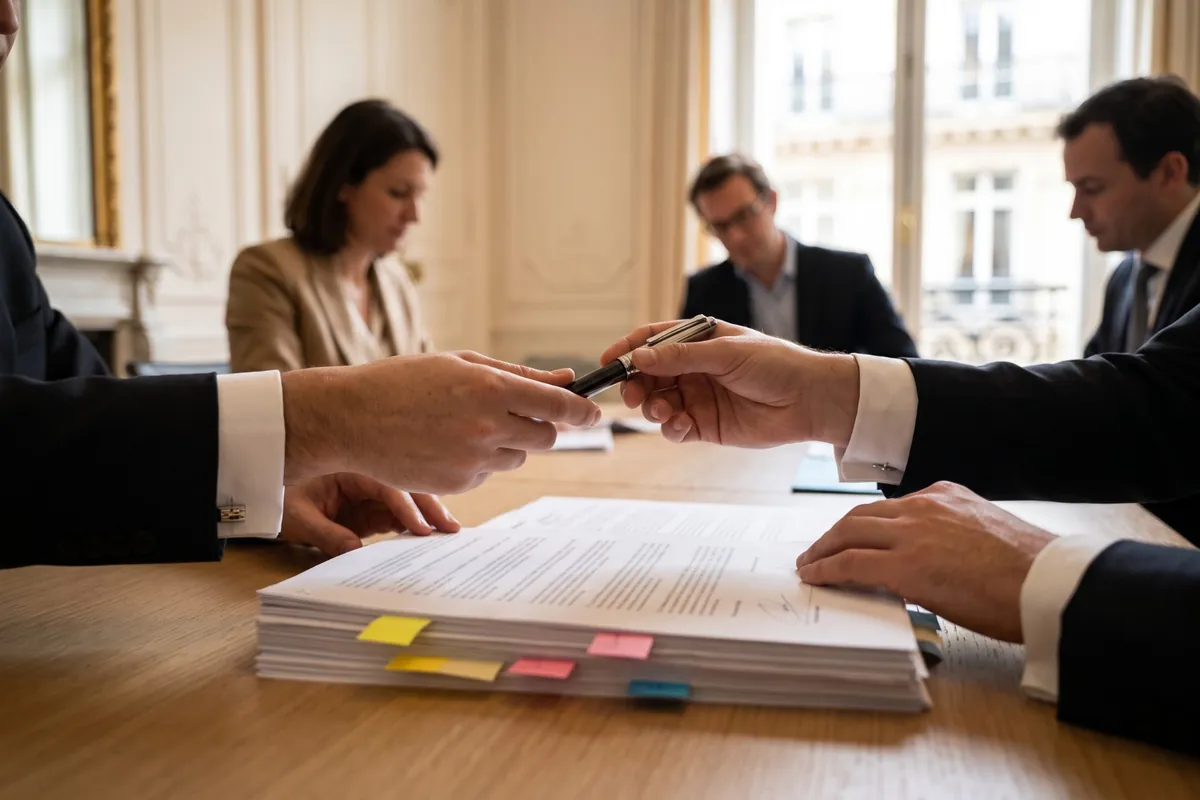
AI-generated image
A narrow exit market
Private equity refers to funds that take stakes in private companies and sell them a few years later. The exit is when the fund manager, known as the GP (general partner), returns the proceeds to the investors who committed capital to the fund, the LPs (limited partners).
That moment is taking longer to come. In the first quarter of 2026, KPMG counted 635 private equity exits worldwide and the number of exits over the last twelve months was at its lowest level in five years (KPMG, Pulse of Private Equity, April 2026, accessed 15 October 2026).
In France, companies sold in the first half of 2026 had been held for seven years on average (France Invest, 13 October 2026, accessed 15 October 2026). Investments therefore often last longer than planned when the deal was put together.
Secondaries: an exit that is not quite an exit
The secondary market covers transactions in which existing stakes, in funds or in companies, change hands between investors. In the first half of 2026 it passed $120bn, up 20% year on year according to Evercore data (PitchBook, 21 July 2026, accessed 15 October 2026).
GP-led transactions, initiated by fund managers, account for around 54% of that volume (PitchBook, 21 July 2026, accessed 15 October 2026). The most common is the continuation fund: the manager sets up a new vehicle, which buys one or more portfolio companies from its existing fund. Investors in the existing fund then choose to sell their share or roll it into the new vehicle.
Continuation funds dedicated to a single company, known as single-asset, represented $34bn over the period (PitchBook, 21 July 2026, accessed 15 October 2026). For the company, the manager stays the same. Legally, however, the shares change hands.
What the transaction changes in the cap table
The cap table is the record of who owns what: every shareholder, every class of shares, every instrument that gives access to the capital. A recapitalisation through a continuation fund reshapes it in depth.
The new vehicle replaces the existing fund. Secondary investors join the shareholder base alongside the LPs who chose to stay. Management, often invested through a management incentive plan (the set of shares and instruments that gives executives a stake in value creation), has to decide: sell part of their shares, reinvest some or all of their gain, subscribe to a new plan.
Each of these decisions changes the waterfall, meaning the order and the amount each shareholder receives on exit. Preference shares, convertible bonds and value-sharing mechanisms respond differently depending on the price. The calculation has to be run again for the transaction itself, then for the next exit.
These decisions carry legal and tax consequences specific to each situation. Executives and investors involved should review them early with their advisors.
The same information for every party
A continuation transaction brings many parties together: the manager, incoming and outgoing investors, executives, their lawyers and their financial advisors. They all work from the same data: number of shares per holder, subscription prices, rights attached to each class.
When the company has already been through several transactions (capital increases, executives joining and leaving, acquisitions), gathering that data takes time. That time is often missing when the transaction timetable is at its tightest.
Conclusion
A continuation fund extends an investment without changing who leads it. It adds one more chapter to the company's equity history, which has to remain clear until the final exit. Able helps companies, their funds and their advisors keep an accurate, shared view of the capital at every stage: share register, waterfall modelling and transaction tracking.